Who we work with
Our work is with homeowners across central Poland who are considering, planning, or partway through a transition to heat pump heating. The property types and circumstances vary considerably.

Gas boiler reaching end of life
Many of the households we work with have a gas boiler that is approaching or has passed its practical service life. This moment, while disruptive, is also a natural opportunity to reconsider the technology entirely rather than like-for-like replacement.
For these households, we assess whether the existing heating distribution can support a heat pump at acceptable efficiency, and what modifications, if any, would be necessary. We present the options honestly, including the hybrid route where retaining the existing boiler as occasional backup makes sense for the transition period.

Renovations presenting a window of opportunity
When walls are open, floors are up, and the house is already in a state of organised disruption, the cost and inconvenience of integrating a heat pump drops considerably. We work alongside renovation projects where the timing is right to install underfloor heating loops or upgrade radiator sizing as part of the broader work.
Coordinating with other trades requires planning. We are accustomed to working within project timelines and with site managers or general contractors as part of a larger programme of work.
Homes currently heated by oil, coal, or electric storage
Properties without a gas connection are often strong candidates for heat pump installation. There is no existing boiler infrastructure to work around, and the running cost comparison against oil or direct electric heating can be significant.
For properties currently burning solid fuel, there is also the air quality dimension. Czyste Powietrze programme funding was specifically designed with this scenario in mind, and the application process differs slightly from gas replacement cases. We navigate that distinction with you.
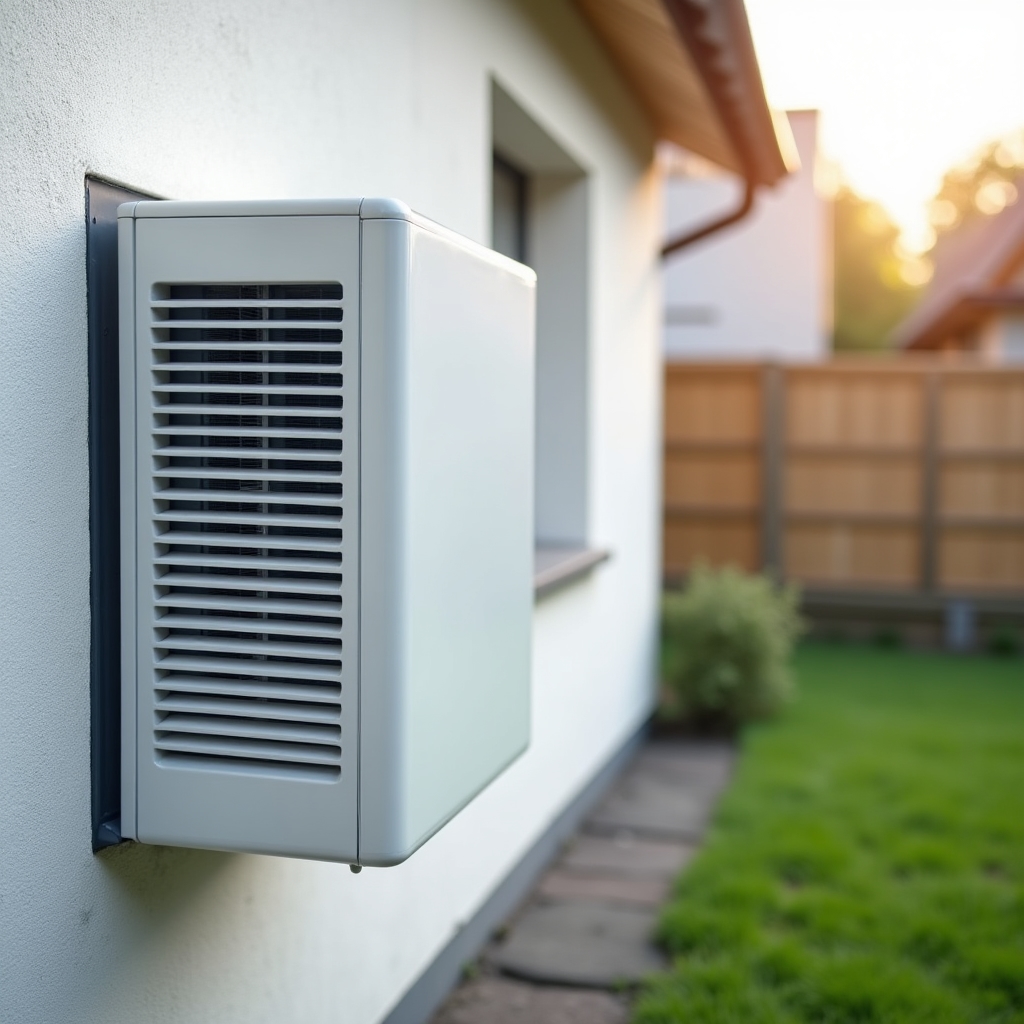
Ground-source systems require more land area and a larger upfront investment, but they offer stable performance through the winter months. Air-source systems are simpler to install and suit more properties. Neither is universally preferable. The assessment determines which is appropriate.
How we evaluate a property
The on-site assessment is not a sales visit. It is a technical evaluation. These are the factors that shape the outcome.
Building heat loss
We calculate the thermal demand of the property based on its construction, insulation levels, window specification, and geometry. This figure drives everything that follows in the system design.
Available outdoor space and ground conditions
Ground-source installations require either horizontal ground loops or vertical boreholes. We assess whether the land area and ground conditions make either feasible, and whether planning constraints apply.
Existing heating distribution
Radiator sizing, pipe dimensions, and the presence of any underfloor loops all affect how much adaptation work is needed before a heat pump can operate at good efficiency.
Electrical supply capacity
Heat pumps require a reliable electrical supply of appropriate capacity. We check the incoming supply and the distribution board to confirm no upgrade is necessary before installation.
Find out if your property is suitable
The assessment is free and carries no obligation. It gives you accurate, property-specific information rather than general guidance that may not apply to your situation.